Mingle254 Blog
Is Being Nonchalant in Dating Healthy or Toxic? (What It Really Means)
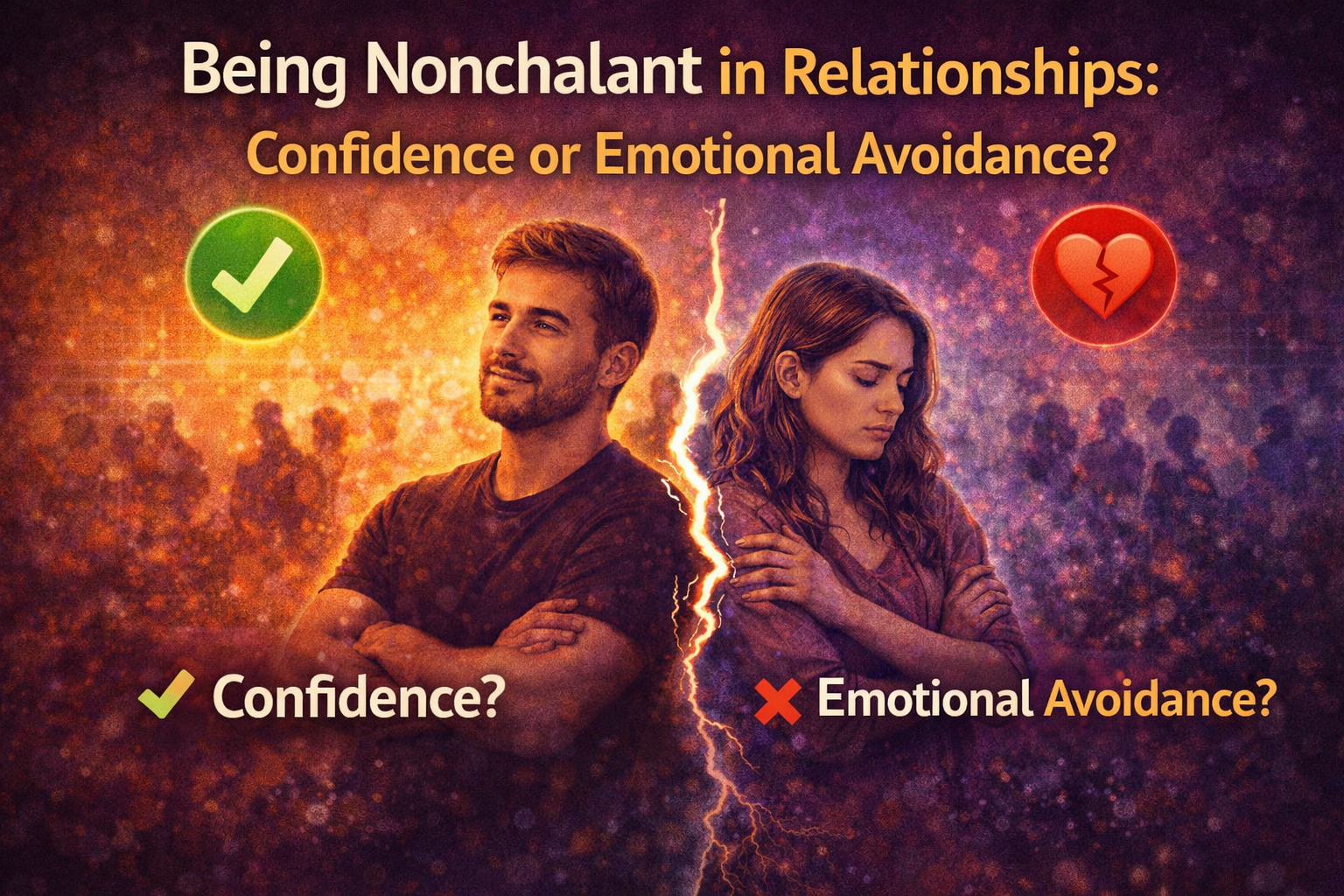
💔 Being Nonchalant in Relationships: Confidence or Emotional Avoidance?
Introduction: The Rise of the “Nonchalant” Personality
In today’s dating world, being “nonchalant” is often seen as attractive.
You’ve probably heard things like:
- “Don’t care too much”
- “Act unbothered”
- “Don’t show feelings too quickly”
And it seems to work — at least at first.
But here’s the real question:
Is being nonchalant a sign of confidence… or a way of avoiding emotional connection?
Because while it may protect you:
It can also quietly destroy meaningful relationships.
If you’ve experienced emotional distance in dating, this may help you understand it better: 👉 How to Deal with an Emotionally Unavailable Partner (Without Losing Yourself)
What This Guide Will Help You Do
- Understand what nonchalance really means
- Identify whether it’s healthy or harmful
- Learn how to balance confidence and emotional availability
🧠 What Does “Nonchalant” Mean in Relationships?
Being nonchalant typically means:
- Acting calm and unbothered
- Not showing strong emotions
- Appearing detached or indifferent
In dating, it can look like:
- Taking long to reply intentionally
- Hiding feelings
- Avoiding deep conversations
- Not expressing interest clearly
But not all nonchalance is the same.
⚖️ The Two Types of Nonchalance
This is where most people get confused.
✅ 1. Healthy Nonchalance (Confidence)
This is genuine confidence.
It looks like:
- Being emotionally stable
- Not being desperate or clingy
- Having your own life and priorities
- Not overreacting
This version is attractive because it shows security and balance.
❌ 2. Unhealthy Nonchalance (Emotional Avoidance)
This is where problems begin.
It looks like:
- Avoiding vulnerability
- Suppressing feelings
- Acting like you don’t care when you do
- Withdrawing instead of communicating
This is not confidence — it’s fear disguised as control.
💔 Why People Become Nonchalant
Understanding the “why” is important.
🧠 1. Fear of Getting Hurt
After being hurt, people think:
“If I don’t care too much, I won’t feel pain.”
💔 2. Past Relationship Trauma
Experiences like:
- Rejection
- Betrayal
- Emotional neglect
Can cause people to shut down emotionally.
🎭 3. Social Media & Dating Culture
Modern advice often promotes:
- “Act like you don’t care”
- “Make them chase you”
This encourages emotionally unavailable behavior.
🛡️ 4. Desire for Control
Not showing emotions can feel like power.
But in reality, it limits real connection.
🚩 Signs Nonchalance Is Hurting Your Relationship
If you or your partner shows these signs, it may be unhealthy:
- Avoiding serious conversations
- Not expressing feelings
- Creating emotional distance
- Making the other person feel unsure
- Withholding affection intentionally
If someone feels confused about how you feel, the connection is already weakening.
If you’re unsure whether these are red flags, read: 👉 15 Red Flags You Should Never Ignore in a Relationship (Complete Guide)
❤️ Why Nonchalance Can Damage Relationships
❌ 1. It Creates Emotional Distance
Love requires:
- Openness
- Vulnerability
- Communication
Nonchalance blocks all three.
❌ 2. It Confuses Your Partner
Your partner may wonder:
- “Do they even care?”
- “Am I important to them?”
This leads to insecurity.
❌ 3. It Prevents Deep Connection
You can’t build:
- Trust
- Intimacy
- Emotional safety
Without showing your true self.
❌ 4. It Attracts the Wrong Dynamics
You may attract:
- People who enjoy chasing
- People who are emotionally unavailable
Result: unstable relationships.
If your relationships start feeling unstable or draining, this may help: 👉 12 Signs You’re in a Toxic Relationship and What to Do Next
⚖️ Confidence vs Emotional Avoidance
| Confidence | Emotional Avoidance |
|---|---|
| Expresses feelings calmly | Hides feelings completely |
| Communicates openly | Avoids deep conversations |
| Feels secure | Fears vulnerability |
| Balanced independence | Emotional distance |
| Builds connection | Blocks connection |
The difference is not behavior — it’s intention.
🛠️ How to Be Confident Without Being Emotionally Distant
This is the balance you want.
💬 1. Express Your Feelings Honestly
Instead of hiding:
Say what you feel calmly and clearly.
Example:
- “I enjoy spending time with you”
This builds clarity, not weakness.
⚖️ 2. Maintain Independence (Without Disconnecting)
Have:
- Your own goals
- Your own interests
But stay emotionally present.
🧠 3. Be Emotionally Aware
Ask yourself:
- Am I avoiding this conversation?
- Am I hiding how I feel?
Awareness is key.
❤️ 4. Allow Vulnerability Gradually
You don’t need to open up instantly.
But you should open up over time.
💬 5. Communicate Instead of Withdrawing
Instead of:
- Ignoring or distancing
Do:
- Express what you’re feeling
💔 If You’re Dating a Nonchalant Partner
This can be challenging.
🧠 Understand First
Ask yourself:
- Are they confident or emotionally unavailable?
💬 Communicate Your Needs
Say:
- “I need more clarity and emotional openness.”
⚖️ Set Boundaries
If they:
- Continue being distant
- Refuse to communicate
You must decide what you’re willing to accept.
🛑 Don’t Chase Emotional Unavailability
You can’t force someone to open up — they must choose it.
🧾 Self-Check: Are You Truly Nonchalant or Avoidant?
Ask yourself:
- [ ] Do I avoid expressing feelings?
- [ ] Do I act like I don’t care when I actually do?
- [ ] Do I withdraw during emotional moments?
- [ ] Do I fear vulnerability?
If yes, it may be emotional avoidance.
🧠 Final Thoughts
Being nonchalant is not inherently bad.
But it becomes a problem when it blocks connection.
The goal is not to:
- Care less
- Feel less
The goal is to care with balance and feel without fear.
💬 Let’s Talk
Do you think being nonchalant helps or harms relationships?
🔥 Final Takeaway
True confidence is not hiding your feelings — it’s expressing them without fear.
📚 Related Reads